Commercial plumbing rewards a steady hand and the right kit. The systems are larger, the tolerances tighter, and the consequences of a mistake far more public. A misread on a 3-inch water main won’t just dampen a closet, it can shut down a kitchen line, trigger an insurance review, and burn a week of schedule. Over the years I’ve watched projects stay on track not because the crew worked harder, but because they brought advanced tools that shorten the path from problem to answer. The gear matters, but only when paired with judgment shaped by jobs that didn’t go as planned.
What “advanced” actually means on a busy site
Tools earn the label by saving time without shifting risk onto someone else. In commercial plumbing, that often means gaining visibility, tightening repeatability, or moving heat and force with surgical control. A camera that sees behind risers, a press tool that returns the same crimp profile every cycle, a meter that logs data to defend a design decision three months later. These tools don’t make you a better plumber on their own. They give you data and repeatable processes so you can make better calls. When we specify them, we look for three traits: durability under daily use, compatibility with the system types we actually install, and support that doesn’t collapse in the middle of a rush job.
Inspection cameras that pay for themselves
Video inspection gear used to be a specialty expense. Now, I would not open a slab or sign off an existing tie-in without one. For a new hotel wing, we pushed a 200-foot camera through a 4-inch sanitary line laid under a parking ramp. The line had been water-tested, but the camera found a slight offset at a coupling just past a sweep. No leak yet, but the lip would catch paper and grease. We ground out the coupling and reset it. That hour saved the GC from a call two months later when the restaurant opened.
For commercial work, inspection cameras earn their keep when they hit a few marks. You want pushrod stiffness that still negotiates multiple 90s, self-leveling heads so the footage doesn’t disorient your crew, and locators that pair with the head to map depth within a foot or two. On larger campuses, I’ve used mapping mode to walk a line above ground, flag utilities, and hand the GC a PDF of the route. It solves disputes before they start.
The temptation is to overbuy on resolution. In occupied buildings, portability and battery life outrank a 4K sensor you can’t power all day. Cameras earn more when they come out quickly. I keep a compact reel in the van for branch lines and a long-reach unit in the shop for mains and storm. The small one earns the most billable hours.
Location, mapping, and what the beeps really mean
Cable and line locators turned from a guessing game into a quantifiable process. Modern units let you induce a signal on a metal line or use a sonde on a camera head when the line is non-metallic. On a high school retrofit, we tracked an ABS storm leader under a concrete stage that no one wanted to cut. The sonde gave us depth between 38 and 42 inches. We offset our new tie-in by 4 inches to clear a confounding electrical sleeve we found later. That would have been impossible without the readout.
Still, locators demand skepticism. Soil moisture, parallel metallic lines, and rebar can throw you off by a foot or more. Sweep perpendicular to your first pass and double-check depth estimates with one or two potholes. On tight schedules, I assign one plumber to locate and another to challenge the marks. This friendly friction keeps everyone honest.
Press systems and the death of the extra torch
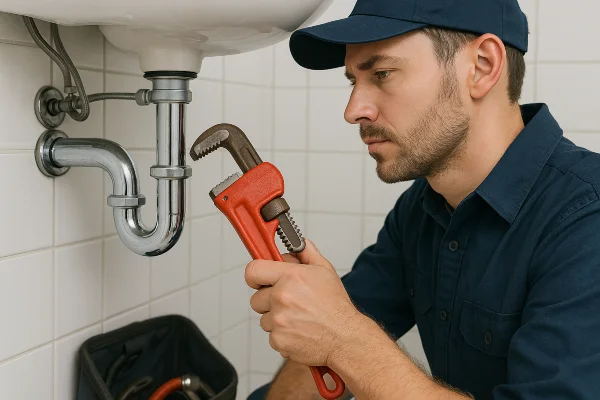
Press tools changed commercial timelines. For copper domestic water, the ability to crimp a 3-inch coupling in seconds, with repeatable force and without hot work permits, cuts hours from a typical day. On a hospital floor with active oxygen lines, we swapped dozens of valves without setting off alarms or staging fire watches. The tool delivered uniform crimps, and the smart jaws shut down if the cycle didn’t complete.
The edge cases still matter. Press fittings have gaskets that don’t like heat or incompatible oils, and on steam or high-temperature hydronic loops the specification may prohibit them. When a system cycles at 190 to 200 degrees Fahrenheit, I still reach for brazing rod or a grooved solution rated for the temperature. I also test press joints aggressively. On big mains, we often go above the standard test pressure by a margin, within manufacturer limits, to expose any marginal seals before the walls close.
Pex and multilayer press have their place, but in commercial work I’m cautious in mechanical rooms. UV exposure from nearby lighting and the long-term heat profile around boilers can age some plastics faster than expected. In tenant suites and long corridor runs, they shine. Near plant equipment, copper or steel with press or groove gives better sleep.
Grooved systems for speed and serviceability
Grooved couplings on steel and copper bring a different kind of speed, especially for large diameters. We used grooved 6-inch steel for a chilled water loop across a 300-foot span above a convention hall. With chain vices and a roll groover, the crew stood lengths, cut grooves on the ground, and assembled with predictable torque. The couplings allowed slight misalignment, saving a rigging headache.
Grooved joints make future service easier. You can isolate sections, pull a valve, or add a branch with minimal cutting. The cost is in the tooling and fittings, and the need to keep groove depth precise. A mis-setting on the groover creates leaks you won’t see until the system warms and expands. I insist on a groove gauge at the station and a second check on the first few cuts of each shift. The torque chart sits in a plastic sleeve on a column. No one tightens by feel.
Orbital welding, when the stakes justify it
On high purity, medical gas, and some food and beverage lines, orbital welding isn’t a luxury. It is the only way to control heat input, bead profile, and contamination risk at scale. We welded 1-inch stainless for a pharmaceutical feed with full purge, documented parameters, and coupon tests. The heads aren’t cheap, and the learning curve is real. But when inspectors want traceability or a third-party test lab is part of the handoff, orbital makes the project defensible.
Field conditions can complicate orbital work. Wind and temperature shifts skew purge times. Power supply stability matters, particularly in older buildings with suspect circuits. We run a small inverter generator for the welding station to keep the arc steady. Consumables and prep matter more than in manual TIG. Expect to spend as much time cleaning, facing, and aligning as you do welding. The payoff is joints that match the print and pass without drama.
Hydrostatic and pneumatic testing with data you can defend
Every plumber has a pressure story. The one that held for hours, then dropped a few PSI overnight and the finger-pointing began. Logging test data changes those conversations. Digital gauges that record pressure and temperature give you a trace that shows a drop relative to ambient cooling or proves a steady hold under changing conditions. On a 20-story riser, we charged in the late afternoon, watched temperature fall by 6 degrees overnight, and saw a matching pressure change. The morning warmup showed pressure rising back to the initial setpoint. We brought the graph to the meeting and moved on.
Hydrostatic tests remain the default for most systems, but cramped renovations and sensitive finishes sometimes push teams toward air. I try to resist unless the spec allows it and the risk of water damage is truly high. Air stores energy differently than water. A failure at 60 PSI air will turn a plug into a projectile. If you must test with air, isolate segments, use rated caps, clear non-essential staff from the zone, and take the pressure up in small steps while listening and soaping. Data-logging helps here too: it forces disciplined ramps and holds.
Thermal imaging and ultrasonic listening
Thermal cameras are no longer exotic, and their real value sits in calibration and context. During a commissioning sprint on a mixed-use tower, we used a handheld thermal imager to hunt down short cycling in a radiant manifold. Two loops ran colder than the others. The camera showed a faint temperature drop at a slab penetration that matched a kink we suspected from the pour. We balanced around it for turnover, then scheduled a repair when the unit was vacant.
Thermal isn’t just for heat. Hot water recirculation loops can bleed heat into uninsulated sections and drive energy bills up. A quick scan down a corridor identifies fittings where insulation was missed or got wet during drywall work. Fixing these after the fact saves the owner money every month. Ultrasonic leak detectors add another arrow. In a noisy mechanical room, they cut through the background and hear weeping valves and small pinholes that a stethoscope misses. Pairing ultrasonic with thermal often tightens your search from a floor to a square foot.
Smart metering and temporary monitoring
Large commercial installations benefit from temporary meters during startup. Strap-on ultrasonic flow meters, clamp-on ammeters for pump draws, and wireless temperature probes create a picture of how a system actually runs. On a university lab building, we verified designed delta-T across air handling coils by logging supply and return temps every five minutes for a week. The data exposed an undersized bypass that kept a pump working harder than design. The fix was a small valve change, a big energy win, and the owner noticed.
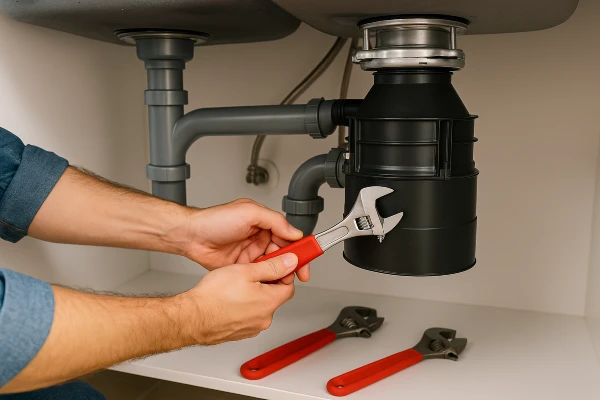
The trick is choosing sensors that install quickly and get out of the way. Magnetic strap-on temperature probes beat taped thermocouples during commissioning because they move from pipe to pipe without adhesive residue. For flow, clamp-on ultrasonic takes patience, but once you learn the transducer spacing and pipe prep, you can get repeatable numbers in minutes. We label our cables and keep a cheat sheet in the case with standard spacings for 2- through 8-inch steel, copper, and PEX with aluminum core. Those small touches keep the day moving.
Sawing, drilling, and coring without collateral damage
Cutting in commercial settings is a choreography. Above-ceiling cuts compete with MEP neighbors, and every hole presents a firestop and structural question. Advanced tools make you faster, but more https://theleanderplumber-company.com importantly, precise.
For core drilling, vacuum base rigs combined with water collection keep the floor below clean. A common mistake is trusting a vacuum base on rough concrete without a secondary anchor. If the power blips, the rig can slip. We add a drop-in anchor as insurance. For post-tension slabs, scanning with GPR or advanced metal detectors is non-negotiable. Hitting a tendon is a five-figure mistake and a schedule crater. Scans aren’t perfect, but they give confidence windows where cores can proceed. When someone pushes to skip, I ask them to sign the risk. That usually ends the debate.
For pipe, cold-cutting saws and low-spark cutoff wheels reduce fire risk and keep metal dust down. On 6-inch carbon steel, a portable band saw with the right blade leaves a square cut with minimal burr. The time saved on prep often exceeds the cut time difference compared to a torch.
Crimpers, expanders, and the nuances of plastics
On plastic systems, the right expander or crimper makes the difference between a smooth day and callbacks. For PEX-A, powered expanders reduce wrist strain and create even expansion on larger sizes. Mark your stop depth on fittings and give each joint the recommended relaxation time before pressurizing. Rushing this step creates ovals that look fine dry but seep at pressure.
CPVC and PVDF in commercial labs require sharp shears or ratcheting cutters that don’t crush the pipe. Deburring tools aren’t optional. Solvent cement joints should be rotated and held long enough to set, especially on larger diameters where cure times stretch. On a biotech job, a new hire rushed 3-inch CPVC solvent welds in a cold room. They looked bonded, but the cure stalled. When we tested 48 hours later, three joints wept. We cut them out, rewelded, and staged portable heaters to keep the area within the cement’s temperature range. Tools that monitor and log ambient conditions help justify cure windows to GCs under pressure.
Torque, tension, and the math of repeatability
Measure what matters and you free your brain to focus on the tough bits. Torque wrenches and tension meters for hanger rods aren’t glamorous, but they prevent over-tightening that crushes gasketed joints or strips inserts in concrete. On a stadium, we ran torque procedures for all 4-inch and larger flange joints. The sequence was star pattern, three passes, and final verification. It took fifteen minutes per flange, which felt long until you compare it with draining and resealing a 200-gallon loop because a flange wept at startup.
For hanger systems, laser levels paired with smart phones have made slope control almost boring. We set a floor’s sanitary slope with a baseline laser and use pre-cut hanger rods labeled by zone. The layout speeds up, and the predictable drop across the run keeps inspectors happy. Advanced doesn’t always mean digital. Sometimes it means pre-thinking the job and using simple tools with discipline.
Site lasers, total stations, and prefabrication alignment
Complex commercial jobs benefit from layout tools borrowed from surveying. Rotating lasers are standard, but when you step up to a total station, prefabrication becomes plug-and-play. On a hospital central utility plant, we shot hanger points, framed supports, and verified equipment pads before any steel arrived. When the prefabricated racks came in, they landed where they belonged. The total station minutes are cheap insurance compared to reworking racks that miss collision points by an inch.
Prefabrication turns a shop into a factory floor. Tools shift accordingly. Pipe spiders, jig tables, and positioners make welds consistent and reduce fatigue. Barcode tracking tied to BIM models keeps pieces aligned with drawings. Field verification remains essential. Even the best models meet reality differently in older buildings. A five-minute reality check with a laser before final welds avoids a world of pain.
Safety gear that actually mitigates the real risks
Advanced tools can breed confidence, which can lead to shortcuts. The best crews maintain safety rituals that match the tools. When pressing in combustible environments, gas monitors run continuously and alarms dictate work stoppage, not negotiation. When testing with air, rated barricades protect adjacent trades from a cap letting go. For camera work, gloves that grip a wet pushrod and a foot on the reel prevent a mid-run whip that can break knuckles.
Simple habits make advanced tools safer. Checklists at the tailgate meeting, one-liners like “no live torch without a second set of eyes,” and a culture that lets apprentices ask, “Are we set up to fail?” These are tools too. They fit in any kit, cost nothing, and keep your name off incident reports.
Batteries, chargers, and the quiet logistics of uptime
Cordless gear runs modern sites, and the best companies manage batteries like inventory. We migrate toward a single battery platform for most small and mid-size tools to reduce charger clutter and swap friction. For the outliers, a dedicated rolling case keeps rare batteries and their chargers together. A label on each pack shows the month and year it entered service. After three to four years, packs show enough degraded runtime that they belong in the shop as backups, not on high-wire field tasks.
Chargers live in a vented gang box with a simple power meter. If voltage dips on a crowded temp power circuit, we know before tools die on the ceiling lift. A spare inverter generator in the truck saves more hours than it costs. None of this is glamorous work, but it keeps advanced tools doing advanced things.
Software quietly backing the hardware
It’s easy to focus on the physical tools and ignore the software running in the background. For complex commercial installs, photo logs with timestamps and annotations build a case that protects you when walls close. On a mixed-use build, we photographed every pressure gauge in place at the start and end of tests, with a tape measure in the frame to provide scale and context. A simple cloud folder, named by floor and riser, turned arguments into quick resolutions.
Manufacturers’ apps for press tools, inspection cameras, and meters have improved. I’m careful with them. I prefer local export of logs and screenshots to a neutral format like PDF or CSV that survives app updates and phone swaps. When a spec requires data retention, assign a person to collect and archive before the crew leaves for the day. Memory fades on Friday evenings.
Choosing tools with an eye on service and training
Shiny features matter less than support. In my shop, any advanced tool purchase gets three questions. First, who fixes it locally within a week? Second, how many people on our crew can use it without a phone call? Third, will it talk to the systems we already use? A powerful camera head without a service center nearby is dead weight when the lens fogs. A press tool with unfamiliar jaws slows everyone down. A meter that exports only through a proprietary app costs hours when the IT policy blocks it on site Wi-Fi.
Training reduces most of the friction. A half-day in the yard with a vendor rep answering blunt questions saves weeks. I like to simulate failures during training. What happens if the press jaw stalls mid-cycle? How do we recover a camera head stuck in a trap? Where is the manual release on the orbital welder? These are not hypotheticals on a live job.
Costs that pencil out
Advanced tools do cost more. The mistake is to tally the sticker price without valuing the avoided labor, permits, and schedule risk. A press tool kit can cost several thousand dollars, but on a hospital renovation it removes the need for hot work permits across dozens of shifts. That translates to lost time avoided every morning and night. A good inspection rig prevents one avoidable slab demo and pays for itself. Grooved systems add per-fitting cost but slash onsite welding time and simplify future remodels that owners inevitably request.

Where budgets pinch, consider rentals for truly specialized gear. Orbital welders, large coring rigs, and total stations can be rented until you see steady demand. Start by renting with an operator if the learning curve is steep, then buy once the crew is fluent and the work justifies it.
A short field checklist for tight commercial timelines
- Verify the system type and allowed joining methods before ordering fittings or consumables, including temperature and pressure limits. Stage inspection and mapping tools first, then cutting and joining tools; knowing where and what you will cut saves more time than cutting faster. Set target torque, pressure, and test durations in writing, and log data with timestamps to defend results later. Standardize batteries and consumables for the week, with a backup charger kit and labeled packs ready to rotate. Schedule a 30-minute daily debrief to capture issues and photos before memory fades, and adjust the next day’s tool list accordingly.
The human factor that makes the tools sing
On paper, two teams with the same tools should produce the same outcomes. In practice, the crew that questions assumptions, pairs tools in smart sequences, and teaches the next person what they learned will outperform the one that treats each tool as a gadget. Advanced plumbing tools in commercial work aren’t trophies. They are instruments. Use them to see what others can’t, to prove what you already know, and to bring a degree of calm to a job that rarely slows down.
A plumber who can press and groove, weld and log, scan and core, and explain the why to a superintendent will always have a full calendar. The buildings we work in are getting denser, the space above the ceiling more crowded, and the tolerance for rework lower. The right tools, chosen with care and used with discipline, make complex commercial installations feel less like improvisation and more like craft. And craft is what keeps clients calling you back.
THE LEANDER PLUMBER - COMPANY 1789 S Bagdad Rd #103, Leander, TX 78641 (737) 530-8021