Basement work makes different demands on concrete than a patio or a driveway. You are placing material below grade, often against damp soil, around plumbing penetrations, and in spaces that will see finish flooring and interior loads. Choose the wrong compressive strength, and you may fight curling, dusting, or long-term cracking. Overspecify, and you add cost, slow finishing, and sometimes make things worse. The sweet spot varies by climate, water exposure, and what you plan to build on top of the slab or walls.
I have spent enough time on job sites and in backyards to know that the right mix begins with a conversation, not a catalog. When concrete contractors ask about your basement renovation, they want to know the use, the water conditions, and the schedule. PSI is part of it, but not the whole story. Still, compressive strength is the number printed on mix tickets and building plans, so let’s anchor our decision-making there and build outward to water, durability, finish quality, and budget.
What PSI means and why it matters downstairs
PSI stands for pounds per square inch, the measure of compressive strength at 28 days per ASTM testing. A residential basement project will commonly see mixes in the 3,000 to 5,000 psi range. Strength correlates with cement content and water-cement ratio. Higher psi generally brings lower permeability and better resistance to abrasion. That helps in basements where moisture can telegraph up through the slab and where heavy storage racks or mechanicals sit along the perimeter.
The rub is that higher strength can also mean stickier, less workable mud, especially if it shows up hot on a summer afternoon. That affects finishing. On slabs that will receive a vapor retarder and interior finishes, you care about how quickly bleed water leaves and when the surface can be troweled without trapping moisture. With walls, psi plays with form pressure, set time, and the bond to reinforcement.
I tend to think in ranges. Below 3,000 psi has its place for non-structural fill or very light-duty slabs in dry, temperate climates, but in a basement, that is usually asking for spalling and moisture issues. At 3,500 to 4,000 psi, you hit a reliable baseline. At 4,500 to 5,000 psi, you address moisture and durability concerns in tougher conditions or where you plan to polish the slab as the finished floor.
The typical basement scenarios and what they need
Not all basement renovations involve the same concrete projects. Some are simple slab repairs, others add new footings for steel posts, and some carve out living spaces with new egress windows and walkout entries. Each part wants a different target.
For a slab replacement over a vapor retarder with a standard living space on top, a 3,500 psi mix with a low water-cement ratio around 0.50 or lower, and air entrainment in freeze-thaw climates, performs well. It handles foot traffic, furniture, and the occasional rolling appliance. It also resists dusting and surface wear when sealed.
For a slab under a workshop or gym, or if you intend to burnish or polish the surface, bump strength to 4,000 or even 4,500 psi and pay attention to aggregate hardness. Extra strength tightens the paste, improves abrasion resistance, and keeps the surface from scaling under heavier loads. You will also want a flatness value that supports equipment, so finishing and joint layout matter as much as strength.
Structural elements tell a different story. Spread footings under new columns, thickened slab edges under bearing walls, and underpinning pads typically specify 3,500 to 4,000 psi in residential work. If you are in expansive clay or a high groundwater table, engineers sometimes call for 4,000 to 5,000 psi to limit permeability and maintain performance under cyclical moisture. Follow the stamped plan there, because the psi choice ties into rebar design, footing size, and soil capacity.
Basement walls and frost walls below grade often run 3,500 to 4,000 psi. Where walls act as retaining members against saturated soils, higher strengths and supplemental admixtures improve durability. Waterproofing membranes do a lot, but a denser, stronger wall slows water migration and stands up to potential freeze-thaw at the top of the wall in colder regions.
Finally, toppings and self-leveling overlays have their own psi ratings. If you plan to correct slab flatness with a cementitious self-leveler before installing large-format tile or LVP, check that product’s compressive strength. Many run 4,000 to 6,000 psi and bond to a substrate that should be at least 3,000 psi and properly prepared.
Moisture, permeability, and life below grade
In basements, moisture wins if you ignore it. Strength is one lever, but permeability is the lever you actually want. Lower water-cement ratios produce tighter microstructure, which slows vapor and liquid water migration. A 4,000 psi mix usually implies a w/c ratio near 0.45 to 0.50, although actual numbers vary by supplier. Below 0.45, you get even better tightness, but workability becomes the challenge. That is where water reducers earn their keep, allowing a lower w/c mix to flow without extra water.
Air entrainment is a separate concept. Entrained air creates microscopic bubbles that give freeze-thaw relief. If the slab or wall will see cycles near the top of the foundation where temperatures fluctuate, entrained air in the 5 to 7 percent range helps resist scaling. In basements that stay above freezing year-round, air is less critical for freeze-thaw, but it can still help with workability. The trade-off is a modest reduction in compressive strength for the same cement content, which you can offset by mix design.
Vapor retarders under slabs matter as much as psi. I still see basement slabs poured over poly with holes punched for vapor to “escape.” That is the worst of both worlds. Use an underslab vapor retarder with a perm rating of 0.1 or less, protect it during base prep, tape seams, and then adjust the mix and finish approach to manage bleed water. If you plan wood flooring, a high-performance vapor retarder is non-negotiable, and I prefer at least 4,000 psi concrete with a low w/c ratio to minimize post-cure moisture issues.
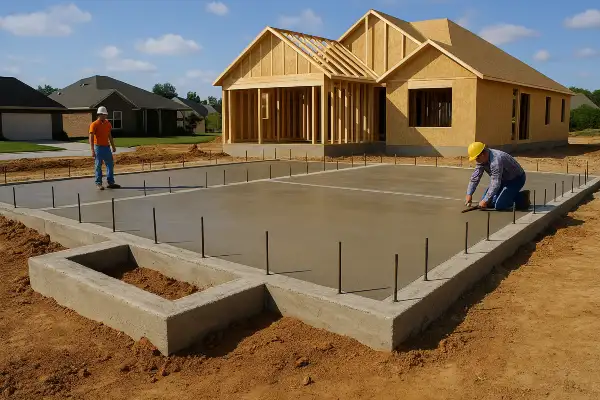
Finish expectations shape the mix
What you plan to see and touch after the renovation should guide the spec. A carpeted family room with a slab covered by pad and glue-down carpet asks less of the surface than a polished concrete studio where every trowel mark and pinhole will be visible.
For polishable floors, higher psi helps achieve a dense, attractive finish. Aggregates matter too. River rock can pop out during polishing, while crushed stone holds a tighter bond. I like 4,000 to 5,000 psi mixes with consistent aggregate gradation, low w/c ratio, and a mid-range water reducer. Avoid excessive calcium chloride accelerators, which can lead to discoloration and promote corrosion of reinforcement, especially where radiant tubing or steel embeds are present. If you want a burnished steel-troweled finish without polishing, allow finishers the time and crew they need. High-psi mixes can set fast and lock in bleed water if the team chases sheen too early.
For utility spaces and mechanical rooms, a 3,500 psi mix with a broom or light trowel finish is perfectly serviceable. It will resist occasional drips and foot traffic without the premium price.
Cold joints, thickened edges, and other realities
Basement work rarely happens in a single, open pour. You cut out a section for plumbing, patch it later, add a thickened strip under a new wall, or pour an equipment pad next to an existing floor. That introduces cold joints. The psi choice interacts with bond strength. Surface prep is more important than raw psi, but matching or slightly exceeding the existing concrete’s strength often helps. A 4,000 psi patch bonds well to a 3,500 psi floor if you profile to at least ICRI CSP 3 to 5 and use an appropriate bonding agent. Epoxy bonding agents increase shear capacity across the joint, but you should still key or dowel where load transfer matters.
Thickened edges under bearing walls and stair landings need attention to shrinkage. Higher psi mixes with low w/c ratios shrink less overall, but the rate of shrinkage and heat of hydration can still curl edges if the slab is thin and wide. ACI guidance on joint spacing helps here. Aim for panels as square as practical and joint spacing around 24 to 30 times the slab thickness in inches, with tighter spacing for higher-shrinkage mixes. On a 4-inch slab, keep control joints in the 8 to 10 foot range. If the renovation layout forces longer panels, fiber reinforcement and a slightly richer mix can reduce crack width, though joints still do the heavy lifting.
Reinforcement, fibers, and how they pair with psi
Rebar and welded wire reinforcement do not increase compressive strength. They control crack widths and carry tension. Fibers reduce plastic shrinkage cracking in the first hours and help with impact resistance later. They also change finishing characteristics. In basements where the slab will be exposed, microfiber blends are less visible than heavy macro fibers. If you plan to polish, confirm fiber compatibility with your finisher. Some mixes pair well with micro synthetic fibers at around 1.0 to 1.5 pounds per cubic yard, which aid early crack control without hairy surfaces.
Higher psi mixes often justify a lighter touch on reinforcement only in non-structural contexts. Do not trade away rebar under bearing lines or column pads just because you selected 4,000 psi. The engineer’s design assumes both concrete strength and reinforcement placement.
Additives and admixtures that make sense below grade
You will see options on the ticket: air entrainment, water reducers, accelerators, retarders, shrinkage reducers, integral waterproofers, and fly ash or slag substitutions. In a residential basement, a short list typically covers the bases.
- A mid-range water reducer provides workable slump without extra water, essential for low w/c mixes and tighter basement placements. Air entrainment is valuable where freeze-thaw can touch the slab or wall, and harmless in many other cases if the finisher understands timing. Supplementary cementitious materials like Class F fly ash or slag cement improve long-term durability and reduce permeability. They also slow early strength gain and set in cool conditions, which might extend finishing windows in summer or frustrate you in late fall. Balance is key. Chloride-free accelerators make cold-weather pours safer without the corrosion concerns tied to calcium chloride. I have used non-chloride accelerators at dosages that bring set times back into a manageable window when ambient temperatures hover in the 40s Fahrenheit.
Integral waterproofers and crystalline admixtures can help wall mixes facing aggressive water, but they are not a substitute for exterior drainage, dampproofing membranes, and proper backfill. If an old stone foundation seeps, your money is often better spent on exterior water management than on exotic mixes.
Regional codes, inspectors, and what’s typical
Minimum strengths are often embedded in local codes and prescriptive tables. Many jurisdictions accept 2,500 to 3,000 psi for interior slabs on grade in dwellings, 3,000 to 3,500 psi for footings, and 3,500 to 4,000 psi for foundation walls. Inspectors focus on footing and wall strength because those elements tie to structural safety. Slabs receive less scrutiny unless radiant tubing or specific finishes are planned.
If you do not have an engineer and are working under prescriptive rules, your concrete contractors will suggest standard mixes they pour weekly. Use those as a baseline, then adjust for your basement’s moisture reality and finish ambitions. Where groundwater sits high, step up to 4,000 psi for walls and slabs, add a proper vapor retarder, and insist on drainage. Where soils are dry and the basement is conditioned space, 3,500 psi with a good subbase and jointing plan performs for decades.
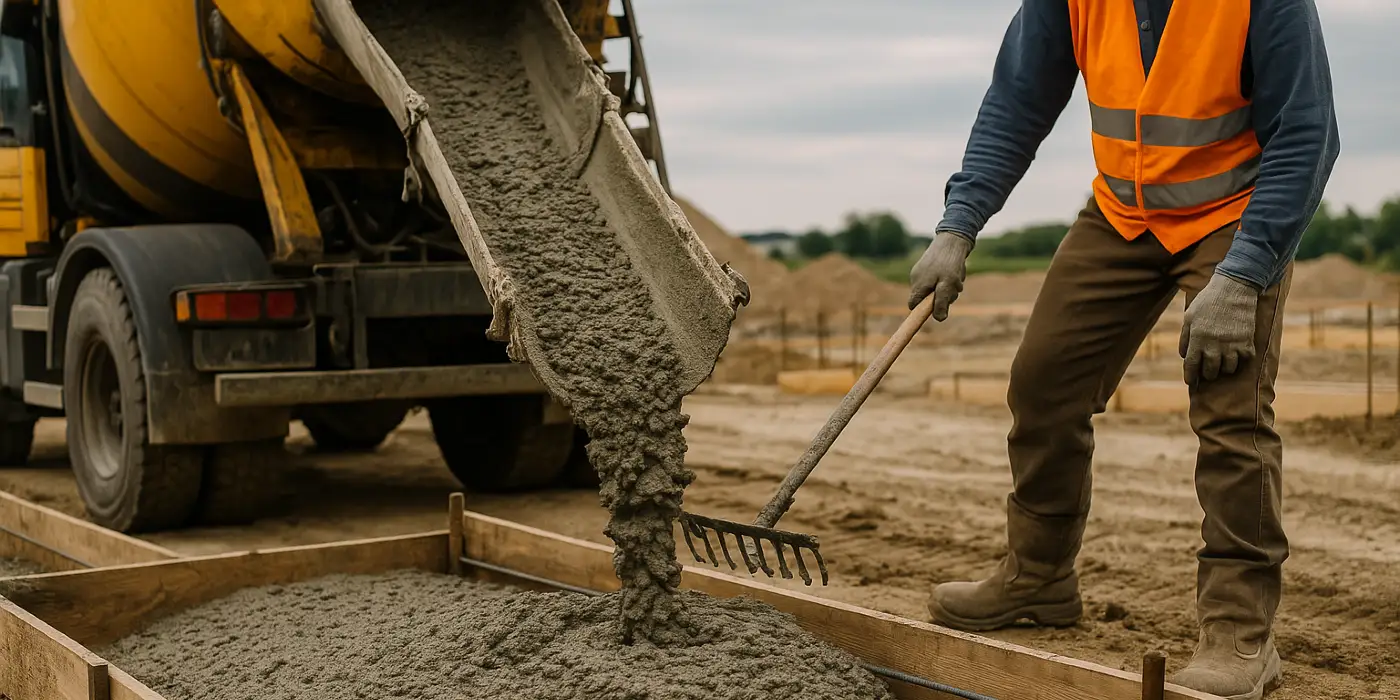
Real-world examples from jobs that behaved
A client in a 1950s ranch wanted a basement home gym with a rubber floor and a squat rack. The existing slab was thin and uneven, with a high water table in spring. We replaced the slab with a 4,000 psi mix, 0.45 w/c ratio, mid-range water reducer, and air entrainment at 5 percent. Under the slab we used a well-compacted 4-inch base of crushed stone, a vapor retarder rated at 0.1 perm, and taped seams. Control joints were cut at 9 feet. That gym has been dry and crack-free for six years, despite seasonal moisture outside. The higher psi and low w/c ratio made the surface tight, and the drainage work kept vapor pressure down.
On a different project, a homeowner planned polished concrete as the final floor in a studio apartment carved from a walkout basement. We specified 4,500 psi with 20 percent slag, no chlorides, microfiber reinforcement, and a consistent aggregate. The finisher waited for the right window before troweling, then the polishing contractor stepped in after 28 days. The surface reads like stone, and the higher psi helped resist the polishing cut-out problems common with softer mixes. The added cost per yard was roughly 15 to 20 dollars, but the total finish quality justified it.
And then there was the budget repair where a small area was cut out to add a bathroom. The homeowner chose a 3,000 psi patch mix that came hot at 6-inch slump. It was finished quickly to match adjacent floor, without a bonding agent or dowels. The joint telegraphed through vinyl plank within a year, and the patch settled slightly around the toilet flange. When we redid it, we prepared the edges to a rough profile, drilled and epoxied dowels at 12 inches on center, used a 3,500 psi mix with a proper water reducer, and placed over a compacted base and intact vapor retarder. No problems since.
Cost, schedule, and the point where psi stops paying you back
Every step up in psi typically adds cement and reduces water, which adds cost. In many markets, moving from 3,000 to 3,500 psi is a small bump, sometimes under 10 dollars per cubic yard. Going from 3,500 to 4,000 psi might add another 10 to 20 dollars. The move to 5,000 psi can add more, especially if the supplier designs a specialized mix with supplementary cementitious materials and admixtures. For a 600 square foot basement slab at 4 inches thick, that is about 7.4 cubic yards. Even a 20 dollars per yard increase is roughly 150 dollars total, which is small compared to labor and finishing. On large wall pours, the difference scales.
Schedule matters too. Higher psi with low w/c ratios can reach stripping strength faster, but if you stock the mix with SCMs in cold weather, early strength gain will slow. The finishing window can either tighten or widen depending on temperature, admixture blend, and airflow. Communicate with your finisher ahead of time so crew size, tools, and timing match the mix you ordered. A good finisher can save you from the most common sin with basement slabs: sealing the surface before the bleed water escapes, which traps moisture and causes surface map cracking or delamination.
How to talk with your ready-mix supplier and contractor
Bring clarity and you will get a better pour. Suppliers know their materials, and concrete contractors understand the nuance between book values and basement realities. When I call a supplier, I keep it tight: below-grade basement slab in a conditioned space, vapor retarder under slab, target finish, joint spacing plan, air or no air, and any special exposure. Then I ask for their standard mix and what they recommend for workability and set time at the expected temperature.
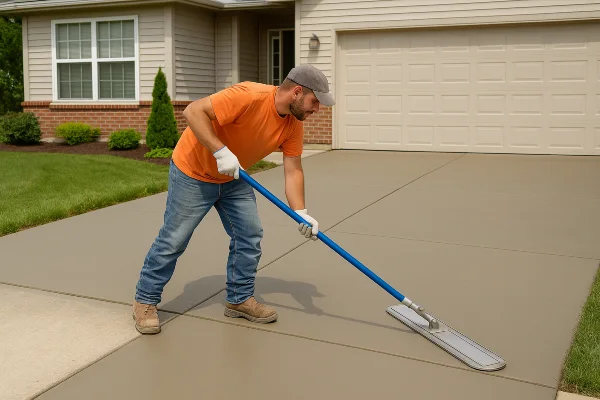
Here is a short checklist you can carry into that conversation:
- Define use and finish: utility slab under storage, carpeted living space, gym, or polished floor. Describe moisture: vapor retarder planned, groundwater conditions, perimeter drains, exterior waterproofing. Specify environment: expected pour temperature range and ventilation in the basement. Confirm reinforcement: rebar, welded wire, or fiber, and where it will be placed in the section. Set expectations for joints: spacing, sawcut timing, and any isolation joints around columns or plumbing.
Those five points usually produce a mix design proposal that fits. If you hear a suggestion that strays far from these basics, ask why. Often there is a site-specific reason.
When to bring in an engineer
If you are adding load-bearing walls, new columns, or cutting and reframing for a larger egress opening, an engineer should set the footing sizes, rebar, and concrete strength. Even if the basement is only getting concrete contractor near me a new slab, unusual soils, high hydrostatic pressure, or settlement history justify professional input. Engineers may call for 4,000 psi concrete for walls and footings where water demands are high, or where smaller sections and higher rebar ratios depend on higher concrete strength. They can also design joint details that prevent cracks from turning into trip hazards and help you avoid patchwork repairs later.
Common mistakes with psi that I try to steer clients away from
Two errors recur. First, chasing high psi without considering finish risks. People order 5,000 psi thinking stronger is always better. In a tight basement on a warm day, that can mean a sticky mix, rapid set, and a surface that finishes poorly. Be sure the finisher is on board, or choose a moderate psi with admixtures that maintain workability.
Second, ordering a high slump from the truck to make placement easier, then wondering why dusting and curl appear. Workability should come from the mix design and admixtures, not extra water on site. A 4 to 5-inch slump with a water reducer will place and finish better than an 8-inch slump from added water. The long-term performance difference is not subtle.
There is also the temptation to skip the vapor retarder because “the slab needs to breathe.” If you plan any floor covering, lay the retarder, then let the bleed water escape to the top and time your finishing correctly. PSI and low w/c ratios help minimize total moisture movement, but they cannot fix the wrong membrane strategy.
Putting the ranges to work
For most residential basement renovations, you can start with this practical framework and adjust up or down with local advice:
- Interior slab for living space over a vapor retarder, no polish: 3,500 psi, air entrained in cold climates, mid-range water reducer, w/c around 0.50 or slightly lower. Workshop, gym, or slab receiving hard finishes or polish: 4,000 to 4,500 psi, low w/c near 0.45, mid-range water reducer, stable aggregates, avoid chlorides. Foundation walls that retain soil and face moisture: 3,500 to 4,000 psi, air entrained where appropriate, SCMs for durability, paired with waterproofing and drainage. Footings and pads for new loads: follow engineered plans, commonly 3,500 to 4,000 psi, with proper frost depth and rebar details.
If you land near these ranges and pair them with solid base prep, a true vapor retarder, correct reinforcement placement, and a thoughtful joint plan, the basement will feel as solid in ten years as it does a month after the pour.
Final thought, drawn from the field
Concrete is forgiving in some ways and unforgiving in others. It will tolerate a handful of small imperfections, but it punishes mismatches between the environment, the mix, and the execution. Choosing the right concrete psi is your chance to set the tone. Combine a sensible strength target with a mix designed for tight spaces and variable temperatures, then give your crew the time and tools to place and finish it right. Most of the quiet, trouble-free basements I have walked on years later started with that kind of decision-making, not heroics on pour day.
If you take nothing else into your planning, remember this: psi is a proxy for how dense, durable, and moisture resistant your slab or wall will be. Use it as a guidepost, not a trophy. The best concrete projects are the ones no one talks about afterward because they simply do their job, out of sight and out of mind, year after year.
TJ Concrete Contractor 11613 N Central Expy #109, Dallas, TX 75243 469-833-3483