No facilities manager plans for flooded lobbies, cold kitchens, or dead restrooms during peak hours. Yet the problems that shut down buildings rarely start as catastrophes. They begin as slow drains, small pressure drops, a pump running a bit hotter than normal, or a check valve that gives up quietly. What separates a minor intervention from a full-blown outage is often the tool you have in hand and how quickly you can put it to work. Commercial plumbing rewards foresight. The right instrumentation, machines, and service tools can take a building from reactive firefighting to calm, predictable operation.
This is not a catalog of gadgets. It is a field view of what prevents downtime across hotels, hospitals, food service, schools, and big-box retail. The stakes change with occupancy load and code requirements, but the principles carry through. Match the tool to the risk, train people to use it safely, and maintain both tool and technique as rigorously as you maintain your pumps and pipes.
The anatomy of downtime
Plumbing downtime has three causes that tend to repeat. First, flow loss in drain lines, usually from solids, grease, or collapsed pipe. Second, pressure or supply-side failure, often tied to pumps, backflow assemblies, expansion tanks, or thermal equipment. Third, leaks, which might be a failed mechanical joint, aggressive water chemistry, or a small pinhole that escalates.

Each type carries its own time profile. A clogged 4-inch kitchen main can take a restaurant offline within minutes; a failing pressure-reducing valve may degrade service over days, showing up as complaints from upper floors. Understanding the time constants helps a plumber choose what to bring on site and what to stage in a shop.
Diagnostic tools that buy time
In commercial plumbing, half the win lies in knowing exactly where the problem lives. Guessing leads to exploratory demolition, which means downtime measured in days instead of hours. The diagnostic stack that consistently keeps projects short is simple: pressure, temperature, flow, and vision.
Digital manometers and pressure gauges with quick-connect hoses let you prove or disprove a theory in minutes. A ten-story building with intermittent pressure complaints can be mapped floor by floor with a single technician, a clipboard, and two test points. Note the baseline at off-peak, then repeat during peak. If pressure drops at all risers equally, you are looking at supply or pump issues. If the drop is localized, suspect a throttled valve, a partially collapsed section, or an undersized bypass. Without gauge data, you are chasing ghosts.
Thermal imaging cameras shorten leak hunts, locate hidden hot and cold lines in walls, and reveal pump and motor bearings that are running too hot. In my experience, an imager prevents at least one wall opening per job during leak detection or repipe design. It is not magic, but it narrows the field quickly, especially in buildings with layered renovations.
Acoustic leak detectors serve when thermal clues are weak, such as chilled water lines or slab leaks under uniform temperatures. On concrete slabs in grocery stores or hospitals, a skilled operator can pinpoint within a foot where a line is bleeding pressure. The value is not only speed, it is minimizing disruption of flooring and finish.
Flow meters that strap onto pipes non-invasively give real numbers without cutting pipe. Ultrasonic clamp-on meters shine during commissioning and troubleshooting, particularly when balancing domestic hot water return loops. If a wing of the building sits cold after three rooms, trust but verify. A temporary meter shows you the imbalance that a thermostat alone cannot see.
Finally, high-resolution inspection cameras with push rods or self-leveling heads are indispensable for drain work, but they also solve oddities in large domestic water piping, like faulty swing checks that keep slamming shut. A good camera with a locator eliminates blind excavation and settles debates fast. If your camera head has a transmitter and your crew knows how to use the locator wand, you control the schedule.
Drain cleaning equipment that ends emergencies quickly
Drain system downtime tends to be high visibility. Guests see it, health inspectors cite it, and odors travel faster than emails. The right combination of machines makes the difference between a two-hour fix and a full overnight shutdown.
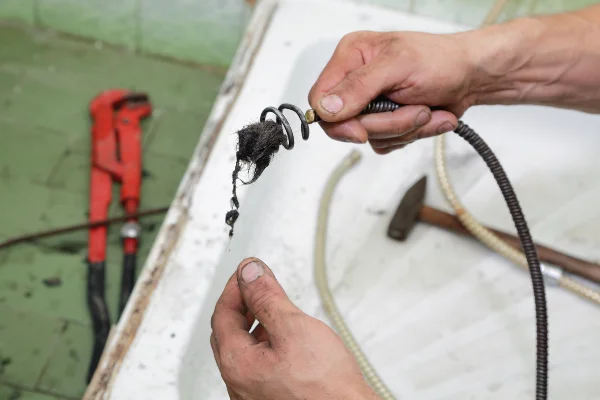
A mid-size sectional Leander plumber machine paired with a range of cutters remains the commercial workhorse for 3 to 6 inch lines. Sectionals give you torque and speed, and they let you tailor the cable length to the job. Keep shear pins and spare couplings on hand. Chain knockers with carbide tips are unforgiving to scale and soft offsets. When cooking grease is the enemy, you need aggressive torque and a nozzle or cutter that can scrape the line clean, not merely poke a hole through it.
High-pressure jetters change the game for long runs, flat grades, and lines with repeated grease events. With pressures in the 2,000 to 4,000 psi range and flows of 4 to 12 gallons per minute, a hydro jetter scours the full diameter of the pipe. Matching nozzle design to the problem matters. A thruster nozzle with more rear jets is best for long pulls. A rotating head with forward jetting cuts roots and scale. In shopping centers with long laterals, a trailer jetter saves hours that a cable machine cannot. If you maintain the jetter properly and let the water do the work, you also extend the time between call-backs.
Small drum machines still have a place for fixture arms and traps, but do not persuade yourself that a bathroom auger will fix a 4-inch main under a banquet hall. I have watched crews chase the same clog three times in a day because they tried to save a trip for the larger machine. The downtime cost dwarfed the extra hour to bring the right tool.
You can reduce repeat incidents by pairing cleaning with documentation. Record a camera pass after jetting. If you see bellies, offsets, or a line constructed with mismatched materials, capture it. The facilities team can plan a repair before the next event during peak season.
Water quality and filtration tools that prevent silent failures
Leaks and valve failures often tie back to water chemistry. Aggressive water eats at copper, while hard water clogs heat exchangers and fixtures. This is where simple portable test kits earn their keep. Test for pH, hardness, chloride, total dissolved solids, and temperature. Not every building needs the same chemistry control, but every building benefits from knowing what flows through its pipes.
If your tests show high hardness, plan for descaling. A scale meter that measures heat exchanger approach temperatures lets you monitor when a tankless or boiler-side plate pack needs cleaning. Portable descaling pumps with quick-connect unions and appropriately chosen acid or citric solutions dissolve deposits without removing equipment from the wall. You keep hot water online and nip the efficiency drop early. Document the frequency. If you are cleaning quarterly in a hard-water zip code, consider upstream treatment.
For aggressive water, especially in coastal or reclaimed water applications, corrosion coupons and sampling ports offer early warnings. If a coupon loses a known mass over a set period, you have hard data to inform pipe material choices and protective measures. It is not glamorous, but it prevents the surprise of pinhole leaks in copper mains that flood corridors and electronics.
Strainers and magnetic filters, if installed on recirculating loops, need regular service. Carry the right magnetic wand and brush kit, and train staff to clean elements without damaging O-rings. Stick to the torque specs on covers. A rushed reassembly can start a slow leak that people miss until it becomes a mess.
Pressure and temperature control tools for steady service
Commercial plumbing depends on a balance between production and protection. You need temperature high enough to control bacteria in hot water systems and pressure sufficient for upper floors, but you also need to protect fixtures and scald-sensitive zones. Tools that let you set and verify these balances keep buildings open.
Calibrated thermometers and surface probes belong in every plumber’s bag, but accuracy matters. I keep one NIST-traceable instrument to verify working thermometers monthly. If you rely on a cheap stick to set mixing valves, you will miss by 5 to 10 degrees and never know it. A 10-degree error invites scalds or Legionella risk. Take readings at the heater outlet, return loop, and farthest fixture. If the delta across the loop grows beyond your baseline, you have a circulation or insulation problem worth addressing before it triggers complaints.
Pressure-reducing valves and mixing valves need test ports. When you replace or install them, add tees with Schrader or hose bib test points. The best time to build in diagnostic capability is during planned work. Later, when a pressure zone starts floating, you connect the gauge and prove the case in minutes. You prevent exploratory teardown and the downtime that follows.
Pump control and verification tools deserve a note. A simple clamp meter with inrush capability tells you whether a pump is struggling, short cycling, or starved. Compare amperage draw against the nameplate and your notes from post-installation commissioning. If the draw climbs and flow falls, suspect clogged strainers, partially closed isolation valves, or a failing impeller. Catch it early, order the part, and schedule the swap during off hours.
Backflow prevention tools that reduce surprise shutdowns
Backflow assemblies are binary in one sense - pass or fail. But the real world has nuance, and the way you test and maintain these devices influences uptime. Invest in a reliable differential gauge for backflow testing, plus calibration agreements so your readings hold up to inspection. A poorly calibrated tester can fail a device that is in tolerance, inviting unnecessary replacement and the downtime that comes with it.
Carry isolation kits, proper relief discharge hoses, and a spill plan. Testing on a live system without controlling discharge can trigger alarms or small floods. In healthcare facilities, an unplanned relief discharge in a corridor is far more than a nuisance. It risks infection control citations. Train your team to stage buckets and hoses before opening test cocks.
Stock the common rebuild kits for the brands installed in your buildings. Most commercial failures involve wear items: check disks, springs, and O-rings. If you can rebuild on site after a failed test and retest immediately, you compress a two-visit problem into one visit and keep the zone pressurized.
Containment and mitigation gear for inevitable leaks
No matter how careful the planning, leaks happen. The difference between an incident and a shutdown is measured by how fast you can control water and how neatly you can work around the issue. The kit I recommend for commercial service calls includes inflatable test balls, pipe freeze kits for appropriate pipe materials, quick-set repair clamps, and wet vacuums with squeegee attachments.
Inflatable balls stop flow in drains while you work downstream or isolate a section for a repair. Choose diameters that cover your most common pipes. Store the inflation hoses neatly and test them quarterly. A cracked hose will ruin your day.
Pipe freezing rigs can be a lifesaver for steel or copper lines when you cannot shut a building zone without major impact. Follow manufacturer guidance to the letter, especially on wall thickness, freeze times, and safety margins. Freezing is not a trick, it is a discipline. Done right, you replace a valve or a tee in an occupied wing without taking the whole floor offline.
Repair clamps can bridge a pinhole or a split while you engineer a permanent fix. Carry a range with appropriate pressure ratings. A cheap clamp installed on a high-pressure domestic main will inspire false confidence and a second failure. Mark the date and location of every temporary clamp in your maintenance software and schedule the permanent correction.
Consider water leak detection and automatic shutoff devices for critical rooms, like telecom closets and IT spaces. A handful of smart sensors tied to motorized valves costs far less than a weekend outage. I have seen a half-inch ice machine feed line rupture and ruin networking gear in under 20 minutes. Sensors and shutoff cut that risk down to a nuisance.
Data capture and documentation as a tool
A plumber’s notebook might be the most valuable tool in the truck. When you capture model numbers, valve positions, baseline pressures, and flow rates, you convert one-off fixes into a living map of the building. Over time, patterns emerge. If a grease line requires jetting every eight weeks, plan a six-week service and avoid the predictable Friday night overflow. If a domestic hot water loop loses 10 degrees across a specific wing, check the balancing valves and insulation during daytime hours, not at midnight during a complaint.
Photos, annotated drawings, and short video clips add clarity. A camera head locator reading scribbled on a plan saves time on the next dig. A note about the odd gate valve that closes clockwise helps a new tech avoid a snapped stem. These small touches are not administrative overhead, they are downtime prevention.
Tool readiness, maintenance, and training
The best equipment fails if batteries are dead, cables are kinked, or technicians have never practiced. Build a monthly routine to charge, clean, and test. Jetters need descaling of their own if you run hard-water supplies. Replace nozzles before they erode to blunt cones that waste water. Inspect camera heads for cracked lenses and clean the skids. Label batteries with in-service dates and retire them on a schedule, not when they die on a job.
Training matters as much as torque. A plumber who grew up on cable machines will not get full value from a hydro jetter without instruction and experience. The first dozen uses teach the feel of a nozzle navigating tees and wyes and the sound of a line opening up. The same goes for thermal imagers and acoustic detectors; interpreting the picture takes practice. Pair newer techs with veterans and rotate tools so the skill base spreads.

Keep safety tight. High-pressure water cuts skin and eyes easily, and pipe freezing kits present real hazards if they are misapplied. A good commercial plumbing operation sets job hazard analyses at the start of work, not after an incident. Gloves, face shields, hearing protection, and confined space protocols are not optional in pits or crawlspaces. Downtime prevention is also injury prevention; an injured tech means a job delayed and a building stuck.
Stocking strategy for multi-site portfolios
Facilities teams responsible for several properties face a different optimization problem. You cannot buy everything twice, but you can stage key tools to minimize response time. Look at call histories. If two properties share a history of long grease lines, park a jetter near them. If a hospital campus with multiple wings sees frequent backflow tests and rebuilds, outfit a dedicated backflow kit with the calibration paperwork and keep it in a locked cabinet where the on-call plumber can retrieve it at odd hours.
Vendor relationships fill the gaps. A tool rental partner who knows your standards can deliver a descaling pump or a large sectional machine within an hour when your primary unit needs service. Treat that partner as part of your readiness plan. Share your building profiles so they understand pipe sizes, connection types, and access constraints. It pays off when you call after midnight.
When to automate and when to keep it manual
Automation helps, but only in the right places. Leak sensors and smart valves, pump VFDs with alarms tied into the building management system, and data loggers for hot water loops can prevent a dozen headaches. They also add complexity and require their own maintenance. Choose automation where the consequence of failure is high and where trends are more valuable than snapshots.
For example, a domestic hot water recirculation loop that serves patient rooms benefits from continuous temperature logging at strategic points. You will see drift days before a cold complaint. On the other hand, a small retail shell space with a single restroom does not need remote sensors and dashboards; a periodic check and a good plunger are enough.
Balance also applies to tool selection. Not every commercial job demands a trailer jetter. A compact battery-powered press tool with proper jaws can replace hours of soldering when a fire watch would slow work, but press tools have limits on temperature and chemical exposure. Know where the manufacturer approvals stop, and keep your copper sweating skills sharp for those edge cases.
Real situations, real savings
A hotel with 300 rooms had repeat clogs in a 4-inch laundry drain. The staff was shutting down one day a month to cable the line; the downtime cost was more than the plumbing invoice. We brought a jetter with a rotating head, cleared 200 feet, then filmed the run. The camera showed a low spot and a misaligned coupling that collected lint. With video in hand, the owner scheduled a targeted repair during low occupancy. The line stopped clogging. Their downtime went to zero, and they retired the monthly emergency call.
In a high school, upper floors complained about low cold water pressure every afternoon. With a digital gauge and a clamp meter, we mapped pressure and pump load over three days. The pump was fine; the pressure-reducing valve downstream was drifting under peak load. We installed ports, replaced the PRV with a properly sized model, and verified the setpoint live. Total disruption to classes: less than two hours, with work staged before and after the school day.
In a grocery store, a slab leak near the seafood case threatened refrigeration. The thermal imager could not see it clearly due to uniform floor temperatures, but the acoustic leak detector picked up a distinct hiss line tracing under a specific tile run. We used a freeze kit on the half-inch copper supply, installed a new section, and restored service within half a shift. The store avoided a product loss that would have dwarfed the labor.
Budgeting for tools that prevent outages
Tools compete with other capital priorities, so frame the decision in terms that property managers care about. Start by calculating the average cost of a shutdown hour in your building type. A restaurant loses table turns; a hospital risks patient care delays and compliance issues; a big-box retailer sees restroom downtime translate directly into lost basket sizes. Assign conservative dollar values. Then compare the amortized cost of owning a jetter, a thermal imager, or a set of backflow test kits over three to five years.
If a $12,000 jetter prevents three four-hour service disruptions at a busy food court over a year, it likely pays for itself before the second summer. Include maintenance and training in the estimate. A $3,000 thermal imager that prevents two exploratory wall openings during leak hunts covers its price in less than a quarter. The math gets even more favorable if you manage several sites and can share equipment.
Working relationships that shorten outages
Even the best-equipped plumber benefits from advance knowledge. Walk buildings with the facilities team during calm periods. Learn access routes, riser locations, drain cleanout placements, and where you can stage equipment without blocking egress or violating fire code. Confirm where after-hours power is available for jetters and descaling pumps, and identify spill containment points. Note your backflow locations and the nearest drains you can safely use for test discharges.
Create a shared contact sheet with on-call numbers that actually reach decision-makers. During a 2 a.m. emergency, waiting half an hour for permission to open a ceiling is a bigger delay than finding the leak. Good commercial plumbing respects the chain of command and builds trust so approvals come quickly. The right tools in the right hands only matter if you can put them to work without procedural delays.
Bringing it together
Downtime prevention in commercial plumbing is not a mystery. It is the practiced habit of matching problems to instruments, machines, and methods that solve them with minimal disruption. It is the discipline of measuring pressure and temperature instead of guessing, of cleaning drains to full diameter rather than to the first sign of flow, of rebuilding a backflow on the spot with the kit already in the truck. It is the humility to document, to plan follow-up work before the next crisis, and to keep your plumbing tools in serviceable condition so they do not fail you when a crowd gathers outside a closed restroom.
The payoff shows up in quiet buildings where fixtures work, kitchens stay open, inspectors nod, and the maintenance log reads like a list of small, well-managed tasks. That is the goal. With the right commercial plumbing tools and the skill to use them, a plumber turns emergencies into scheduled work and keeps business moving.
THE LEANDER PLUMBER - COMPANY 1789 S Bagdad Rd #103, Leander, TX 78641 (737) 530-8021